Jungian Analysis: Archetypes, Dreams, Myths, Imagination
This website describes Jungian analysis, the psychotherapy that C.G. Jung developed, and explains how to enter it.
Michael Vannoy Adams
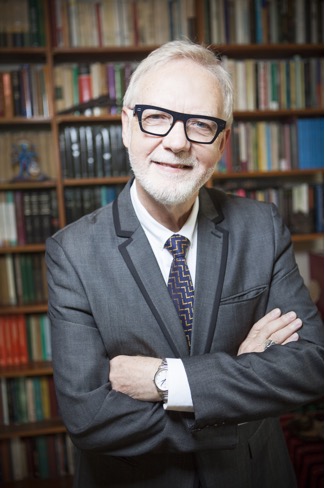
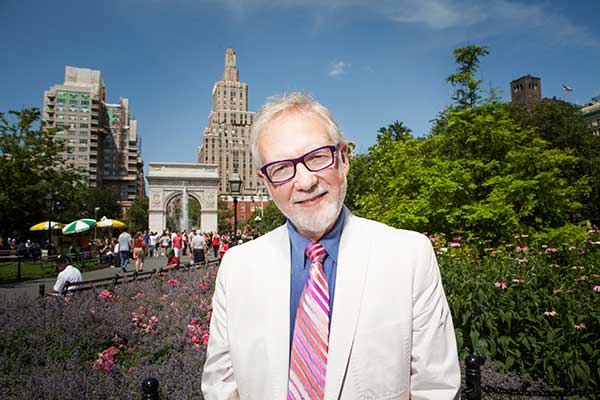
Michael Vannoy Adams is an internationally prominent Jungian analyst who offers psychotherapy for individuals and couples in New York City.
If you would like information about how to enter Jungian analysis, you may contact Michael Vannoy Adams by e-mail at adamsmv (at) aol (dot) com or by telephone at (212) 533-9395.
Jungian analysis is a unique psychotherapy. What is so distinctive — and so special — about Jungian analysis is that it emphasizes images. Jungian analysis is a psychotherapy that exercises and explores the imagination.
"Every psychic process," Jung says, "is an image and an 'imagining.'" He says that "the psyche consists essentially of images," and, even more emphatically, that "image is psyche."
Vitally important images spontaneously emerge from the unconscious in the dreams of everynight life and in the experiences of everyday life. They offer us a vividly precise, profoundly expansive vision of our intimate relations, our material aspirations, our artistic creations, and our spiritual obligations.
These images are both eloquently informative and radically transformative. With exquisite exactitude, they offer us valuable perspectives on what life means – on who we have been, who we are, and who we might become.
Jungian analysis shows us how to interpret these images accurately and how to engage them effectively so that we may live more consciously reflective and decisive lives. It offers us an opportunity to reimagine ourselves.
William Blake says: "If the Spectator could Enter into these Images in the Imagination, approaching them on the Fiery Chariot of his Contemplative Thought, if he could enter into Noah's Rainbow . . . or could make a Friend & Companion of these images of wonder . . . then he would be happy."
Jungian analysis shows us how to live more imaginatively — and more happily — as we love, work, and play.
For more information about Jungian analysis as Michael Vannoy Adams practices it, read "For Love of the Imagination."
Jungian Psychotherapy
What is "Jungian psychotherapy?"
One way to answer this question is to say what Jungian psychotherapy is not. It is not a psychotherapy in which the therapist offers advice to the patient. "For," Jung says, "I do not know what to say to the patient when he asks me, 'What do you advise? What shall I do?' I don't know either."
In Jungian psychotherapy, the therapist deliberately adopts a "not-knowing" attitude.
Why does the therapist not know? The therapist cannot know, immediately, what is unknown – that is, what is unconscious. Jung defines the unconscious as "the unknown at any given moment." He emphasizes that "the unconscious is something that is really unconscious."
Jung says that the therapist must "give up all pretensions to superior knowledge, all authority and desire to influence" the patient. It is not the therapist who knows anything (for example, what is "best" for the patient). Rather, it is the unconscious that "knows" something.
In Jungian psychotherapy, it is not the therapist who offers advice to the patient. Jung says that "we get nowhere by employing well-intentioned advice." It is the unconscious that offers advice to the patient.
Jungian psychotherapy, Jung says, is "a dialogue or discussion between two persons." It is a mutual process, a collaborative conversation, between the therapist and the patient. Together, as equals, the therapist and patient analyze what the unconscious of the patient advises.
The advice that the unconscious offers to the patient is what Jung calls a "compensation." The problem, Jung says, is that the attitude of the conscious mind is too one-sided and too narrow. The solution, he says, is "to compensate the one-sidedness and narrowness of the conscious mind by deepening its knowledge of the unconscious."
Jungian psychotherapy is a "depth psychotherapy," or a "psychotherapy of the unconscious." The purpose of Jungian psychotherapy is to deepen what the conscious mind knows about the unconscious. Jung says that "the real and authentic psyche is the unconscious."
Dreams are especially important in Jungian psychotherapy, for, as Jung says, they are "beyond the control of the conscious mind." Jung regards dreams as "indispensable" to psychotherapy, for they have an importance "equal to the conscious mind itself."
Why dreams are so important is that they are the purest, most spontaneous expression of the unconscious. What the unconscious expresses in dreams are compensations for the one-sided, narrow attitude of the conscious mind. "When we set out to interpret a dream," Jung says, "it is always helpful to ask: 'What conscious attitude does it compensate?'"
When a patient has a problem, Jung does not pretend to know the solution. It is dreams that propose a solution to the problem, so Jung says to the patient: "let us see what they say." Dream interpretation is an essential activity in Jungian psychotherapy.
Jung considers "it the prime task of psychotherapy today to pursue with singleness of purpose the goal of individual development." The development of the individual is what Jung calls "individuation."
Jung defines individuation as a process through which "the patient becomes what he really is." The purpose of Jungian psychotherapy is not for the patient to become merely "normal." Rather, it is for the patient to become truly unique. Jung says that individuation is a process through which "a man becomes the definite, unique being he in fact is."
Jung says that "the fundamental rule for the psychotherapist should be to consider each case new and unique." Jungian psychotherapy provides an opportunity for us to develop as individuals so that, ultimately, through an encounter with the unconscious, we may consciously become who we uniquely are.
Michael Vannoy Adams is a faculty member at the Jungian Psychoanalytic Association (JPA). He is a clinical associate professor at the New York University Postdoctoral Program in Psychotherapy and Psychoanalysis and an associate professor at the New York University School of Social Work. He is also a faculty member at the Object Relations Institute for Psychotherapy and Psychoanalysis and at Eugene Lang College: The New School for Liberal Arts. He was previously associate provost of The New School.
Adams is the author of three books:
- The Fantasy Principle: Psychoanalysis of the Imagination
- The Mythological Unconscious
- The Multicultural Imagination: "Race," Color, and the Unconscious
The Fantasy Principle won a 2005 Gradiva Award from the National Association for the Advancement of Psychoanalysis for best book in interpretation and psychoanalysis.
This is what James Hillman says about The Fantasy Principle:
Michael Vannoy Adams moves the field of psychoanalysis into the 21st century by turning the clock back to the main discovery of Freud and Jung: fantasy rules the psyche. The Fantasy Principle is a major serious researched work and yet a book of imagination and humor. It is also a book aimed beyond professional therapists, engaging everyone who is, will be, or has been in therapy.
Two-time Booker Prize-winning novelist Peter Carey praises "the clear lovely light of Michael Vannoy Adams's prose." National Book Award-winning biographer Deirdre Bair (author of Jung: A Biography) declares that Adams is "a necessary writer for our troubled times."
This is what one Jungian analyst, Greg Mogenson, has written about The Mythological Unconscious:
Reading Michael Vannoy Adams's The Mythological Unconscious, so lucid in its presentation of the essence of Jungian theory and practice, I had the impression that our discipline was awakening within its pages to a vitally new, or rather, vitally renewed awareness of its unique spirit. . . .The Mythological Unconscious is a proud book that reminds us that analytical psychology has much to be proud of. What Edward Whitmont's The Symbolic Quest and E.F. Edinger's Ego and Archetype were for an earlier generation, Adams's book, I predict, will be for our own - a standard in the field for years to come.
Adams has been a Marshall scholar in England and a Fulbright senior lecturer in India. He has received three Gradiva Awards from the National Association for the Advancement of Psychoanalysis.
He is a member of the Metamorphosis Imagination Project, which conducts research on images of transformation.
He has a special interest in the archetypal psychology of James Hillman.
Michael Vannoy Adams, D.Phil., L.C.S.W.
(212) 533-9395
This page has been visited 25220 times since January 15, 2008.